 English
  Русский
  Español
  Deutsch
  Français
  Українська
  Português (Brasil)
  Bahasa Indonesia
  Türkçe
North Korea
Tier 3Everything a marketer needs before entering North Korea: economy, platforms, ad rules, payments and audience.
Economy & income
- Currency
- North Korean won (KPW, ₩ / 원)
- The iconic 2.16 won/USD peg (1978–2001) was abandoned
- today's state 'official' accounting rate (nominally in the ~900 KPW/USD range) is fictional and barely used
- Real purchasing power tracks the informal 'jangmadang' black-market rate, now in acute crisis: ~16,100 KPW/USD (early 2024) → ~18,000 (Nov 2024) → an all-time-high 70,100 KPW/USD in Pyongyang markets by 12 Apr 2026 (+29% in two weeks, Daily NK), driving dollarization and a partial return to barter.
- GDP per capita
- No World Bank/IMF figure (the DPRK is not an IMF member and publishes no economic data)
- CIA World Factbook lists real GDP per capita ~$600 (2023 est., rough)
- Bank of Korea (ROK) estimates nominal GNI per capita ~1.72 million KPW ≈ ~$1,200–1,400 (2024) — about 3.4% of South Korea's
- BOK also estimated the economy grew ~3.7% in 2024 (fastest since 2016)
- All are external estimates
- no reliable official figure exists.
- Average salary
- n/a — state-set, non-market
- Official state wages are nominal (a few thousand KPW/month) and worth only ~$1–2 at the black-market rate
- real household income comes from informal jangmadang markets, side work and remittances, not from state pay.
- Median salary
- n/a — no market wage structure and no published statistics
- the DPRK releases no income data.
- Minimum wage
- n/a — centrally-planned state economy with no meaningful minimum wage (the ~$70–75/mo figure sometimes cited applied only to the now-defunct Kaesong-type special economic zones for foreign joint ventures).
- Cost of living
- n/a — non-market, dual economy (state rations + informal markets)
- jangmadang prices for rice, fuel and FX are the real cost signals and are volatile
- No Numbeo/standard cost-of-living data exists.
Digital landscape
- Population
- ~26.4 million (26,402,841; 2025 est., CIA World Factbook)
- Internet users
- ~0% public global internet
- Only a few dozen elite (Kim-circle) families plus a few thousand vetted officials, researchers and IT students get (heavily surveilled) global-internet access
- ordinary citizens are confined to the domestic Kwangmyong intranet
- Effective public penetration <1%.
- Social media users
- n/a — no Western/global social media exists in-country
- only state-run domestic services on the Kwangmyong intranet.
- Mobile connections
- ~6.35 million cellular subscriptions (2022, CIA) ≈ ~24–30% of the population (DataReportal put mobile at ~29.6% in early 2025)
- Domestic-only 3G/4G via Koryolink and Kang Song NET — no connection to the global internet, no global data or roaming.
- Devices
- n/a — no StatCounter/analytics coverage
- devices are domestic Android-derived phones and Red Star OS PCs locked to Kwangmyong.
- Ad spend
- n/a — no commercial advertising market of any kind
- all media are state-owned and carry propaganda, not paid ads.
- Top social platforms
- Messengers
- n/a — no WhatsApp/Telegram/global messengers; only domestic intranet messaging on state (Koryolink/Kang Song NET) handsets
Ad regulations
BANNED — no legal gambling for citizens and no advertising. The state itself has run foreigner-only casinos (Pyongyang, Rason) and is accused of operating online-gambling sites aimed abroad, but domestic participation is prohibited. Regulator: none (state monopoly).
BANNED — no legal citizen access to cryptocurrency or exchanges. (Separately, state-linked groups such as Lazarus are internationally accused of large-scale crypto theft/laundering — a sanctions-evasion activity, not a consumer market.)
BANNED — pornography is illegal and harshly punished; producing or circulating sexual material is criminal, and consuming foreign media of any kind is severely penalized.
BANNED — no dating apps and no open internet to run them; Western apps are inaccessible. Match-making is informal/family-based.
BANNED — no private consumer finance, credit or payday-loan market; banking is a state monopoly (Central Bank of the DPRK). Informal jangmadang lending exists but is unregulated and grey.
RESTRICTED — pharmaceuticals and health products are state-controlled and chronically scarce; there is no supplement/health-claims advertising market. Informal cross-border (Chinese) medicine trade fills gaps.
- The state — Workers' Party of Korea and government organs (Central Bank of the DPRK for money; Ministry of State Security and propaganda bodies for media/information)
- No independent commercial or advertising regulator exists.
- There is no open internet, no foreign advertising and no affiliate marketing of any kind
- Virtually all commercial, foreign and independent-media activity is banned or state-monopolised
- under the 2020 Reactionary Ideology and Culture Rejection Act, distributing foreign (especially South Korean) media is a grave crime with penalties up to death
- This profile documents the closed reality for completeness, not a reachable market.
Payments & behaviour
- Payment methods
- Cash in KPW (state economy)
- Foreign cash — US dollars, Chinese yuan (RMB) and euros dominate the informal jangmadang markets and are increasingly preferred as the won collapses
- State payment cards — Narae, Jonsong and Koryo cards (domestic prepaid / hard-currency cards, in-country and intranet only)
- E-wallets
- n/a — no global wallets (no PayPal/Apple Pay/Google Pay); only domestic state card/app systems on Kwangmyong
- Cash on delivery
- n/a — no consumer e-commerce reachable from outside
- in-country goods move by cash-and-carry in physical markets
- E-commerce
- ~none for the outside world
- Domestically, intranet shopping malls exist on Kwangmyong — e.g
- Manmulsang and Okryu — paid via state cards, but they are unreachable from the global internet.
- Notes
- No foreign e-commerce, card acquiring or affiliate payout is possible
- the country is largely outside SWIFT and under comprehensive sanctions
- Growing informal dollarization/barter as the won loses value.
Audience & culture
- Languages
- Korean (official — the DPRK 'Munhwaŏ' standard, based on the Pyongyang dialect)
- Religion
- Officially an atheist/secular state built on the Juche ideology (and Kimilsungism-Kimjongilism) — effectively a state cult of the leadership
- Traditional Buddhism/Confucianism and syncretic Chondogyo linger only nominally
- small, heavily-repressed Christian communities exist
- independent religious activity is essentially nonexistent.
- Median age
- ~36.2 years (2025 est., CIA World Factbook)
- Key seasons
- Day of the Sun (15 Apr, Kim Il Sung's birthday — the biggest holiday)
- Day of the Shining Star (16 Feb, Kim Jong Il's birthday)
- Party Foundation Day (10 Oct)
- Republic Foundation Day (9 Sep)
- New Year (1 Jan)
- Cultural notes
- No commercial consumer-marketing environment exists
- public life is organised around state ideology and leadership veneration, and the listed 'seasons' are ideological, not commercial gifting occasions
- Documented for completeness only.
- Where to find creators
- n/a — no independent creators or influencer economy
Media landscape
Top media outlets
- 1 Rodong Sinmun Korean — daily organ of the Workers' Party of Korea Central Committee; the leading state newspaper
- 2 Korean Central News Agency (KCNA) Korean/English/others — the official state news agency
- 3 Korean Central Television (KCTV) Korean — the main state television broadcaster (Pyongyang)
- 4 Minju Choson Korean — official newspaper of the DPRK cabinet/government
- 5 Voice of Korea multilingual — state external shortwave radio service
- 6 Naenara Korean/English/others — official state web portal (external-facing propaganda site)
Top YouTube channels
- 1 n/a — no domestic YouTube (no public global internet). State-linked propaganda vlog channels have surfaced abroad (e.g. 'New DPRK', 'Echo of Truth'/'Sally Parks', 'Song A / Olivia Natasha') but are periodically removed by YouTube for sanctions/ToS violations n/a
Creators & public figures
Top creators
Celebrities
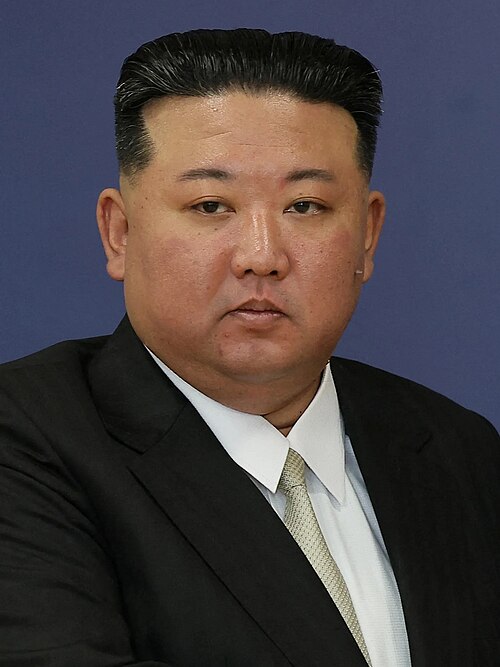
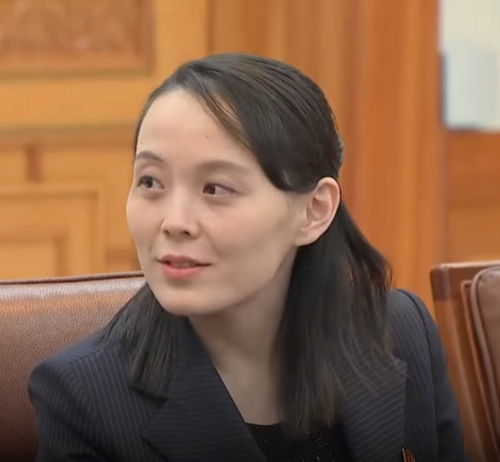
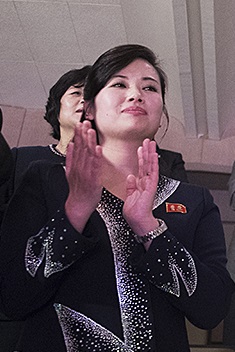
Affiliate & traffic
- Hot verticals
- Active networks
- n/a — no affiliate market; the country is sanctioned and has no open internet or ad ecosystem
- Payouts
- n/a — no ad networks operate
- the DPRK is largely outside the global banking/SWIFT system and under comprehensive sanctions, so payout is impossible
- Competition
- n/a — no addressable market
- Seasonality
- n/a
- Traffic sources
Good to know
- Capital
- Pyongyang
- Major cities
- Time zones
- Single zone — Pyongyang Time, UTC+9, no DST. (Was briefly UTC+8:30 in 2015–2018, then realigned to UTC+9 in May 2018.)
- Android vs iOS
- n/a — no analytics coverage
- Domestic Red Star OS (a state Linux distro with the 'Naenara' browser) on PCs, and locked Android-derived firmware on domestic phones
- all confined to Kwangmyong.
- Phone brands
- Domestic only — Arirang, Pyongyang, Jindallae (Azalea) and Phyongyang series; assembled locally (largely from Chinese components), running modified Android locked to the Kwangmyong intranet. No foreign brands sold officially.
- Top e-commerce
- n/a — no foreign/global e-commerce access. Domestic intranet malls only: Manmulsang and Okryu (on Kwangmyong), paid via state cards
- Peak activity
-
n/a — no measurable open-internet audience🕐 In your time zone (approx.):
- Creative taboos
- The entire market is inaccessible to foreign advertisers
- Any content touching the regime, the leadership (the Kim family), Juche ideology, defectors, or foreign/South Korean media is extremely sensitive and legally dangerous inside the country — distributing foreign media is a grave crime (2020 Reactionary Ideology and Culture Rejection Act, penalties up to death).
- Also worth knowing
- North Korea has effectively NO addressable digital-advertising or affiliate market: no public global internet, no Western social/messaging, no commercial ad ecosystem, comprehensive international sanctions, and a currency in acute crisis (black-market USD rate hit an all-time-high ~70,100 KPW in April 2026)
- This profile exists for completeness of world coverage, not as a live target
- The only faint adjacency is the DPRK defector/diaspora community abroad, reachable via normal South-Korea/overseas channels — not the domestic population.
Indicative reference — always confirm the current rules with the official source before you run.